

Blog
Period Fatigue: Why You Feel Exhausted and What Helps

Quick answer: Period fatigue happens because of blood loss (iron drop), prostaglandins, hormonal shifts, poor sleep and dehydration. It’s normal to feel low, but if tiredness is crushing and doesn’t improve with rest, check iron levels. Simple fixes: iron-rich food, water, gentle movement, rest when needed, and better sleep.
DRAP Approved
Cash on Delivery
Nationwide Delivery
Medical author for Remedial Nexus. Published:
Table of Contents
- Why period fatigue happens
- Is it iron deficiency?
- When energy drops in the cycle
- Quick fixes that actually work
- Food and drink for energy
- When to see a doctor
- Frequently asked questions (Urdu & English)
- References
Why period fatigue happens
If you need a nap by 2 PM on day one of your period, you’re not lazy. Period fatigue is a real thing, and there are several reasons it hits all at once.
Is it iron deficiency?
Iron is often the hidden piece. When iron stores fall, your red blood cells carry less oxygen. Less oxygen means less energy for everything, even if you’re just walking up stairs.
| Symptom | Iron-related? | Notes |
|---|---|---|
| Tired all the time, even after sleep | Very likely | Classic sign of low iron stores |
| Breathless on stairs | Very likely | Less oxygen getting to muscles |
| Pale skin, lips or inner eyelids | Likely | Look in good light |
| Hair shedding more than usual | Likely | Especially after periods |
| Craving ice or dirt | Strong sign | Called pagophagia – worth testing |
| Restless legs at night | Often related | Gets worse with low iron |
| Tired only during period days | Less likely iron alone | May be prostaglandins + sleep loss |
| Brain fog and poor focus | Often related | Very common with low ferritin |
When energy drops in the cycle
Energy isn’t the same all month. Knowing your pattern helps you plan smarter.
| Phase | Energy | Why |
|---|---|---|
| Menstrual (Days 1-5) | Lowest | Blood loss, prostaglandins, low iron |
| Follicular (Days 6-14) | Rising | Oestrogen rising, energy improves |
| Ovulation (Around Day 14) | Highest | Peak oestrogen gives most energy |
| Luteal (Days 15-28) | Falling | Progesterone rises, can feel sluggish; PMS hits late |
Quick fixes that actually work
- Rest without guilt. On the first day or two, do less if you need to. Rest is recovery, not weakness.
- Prioritize sleep. Aim for 7-8 hours. Use a heating pad, comfortable bedding, and avoid screens right before bed.
- Hydrate. Sip water throughout the day. Even mild dehydration makes fatigue worse.
- Move gently. A 10-minute walk boosts energy more than pushing through with zero movement. Skip intense workouts on heavy days.
- Eat small, frequent meals. Low blood sugar worsens tiredness. Don’t skip meals, especially breakfast.
- Warmth helps. A warm drink or hot water bottle eases cramps so you can rest better, breaking the pain-fatigue cycle.
- Fresh air. Step outside for 5-10 minutes. It sounds small, but it genuinely helps.
Do this
Avoid this
Food and drink for energy
| Food/Drink | Why it helps | Notes |
|---|---|---|
| Eggs | Iron + protein | Easy to digest, great for breakfast |
| Liver (kaleji) | Highest iron | Once a week if tolerated |
| Dal with lemon | Plant iron + vitamin C | Double absorption |
| Dates (khajoor) | Iron + natural sugar | 2-3 with nuts is perfect |
| Banana | Potassium + quick energy | Soothes and gives gentle boost |
| Nuts (almonds/walnuts) | Protein, iron, healthy fats | Small handful |
| Guava or orange | Vitamin C + hydration | Pair with iron foods |
| Lassi (unsweetened) | Protein + hydration | Cooling and nourishing |
| Ginger tea | Reduces nausea/inflammation | Warm and gentle |
| Dark leafy greens | Iron + magnesium | Cook with tomato/lime |
Minerals matter for energy
OvaNorm combines Magnesium, Calcium, Zinc and Vitamin C with Vitex and Ginkgo Biloba to support hormonal balance, muscle comfort and overall cycle wellness. While diet and rest come first, targeted nutrition can help when fatigue keeps returning.
When to see a doctor
A little fatigue during your period is normal. Debilitating fatigue is not. Get your haemoglobin and ferritin checked if it’s stealing your quality of life month after month.
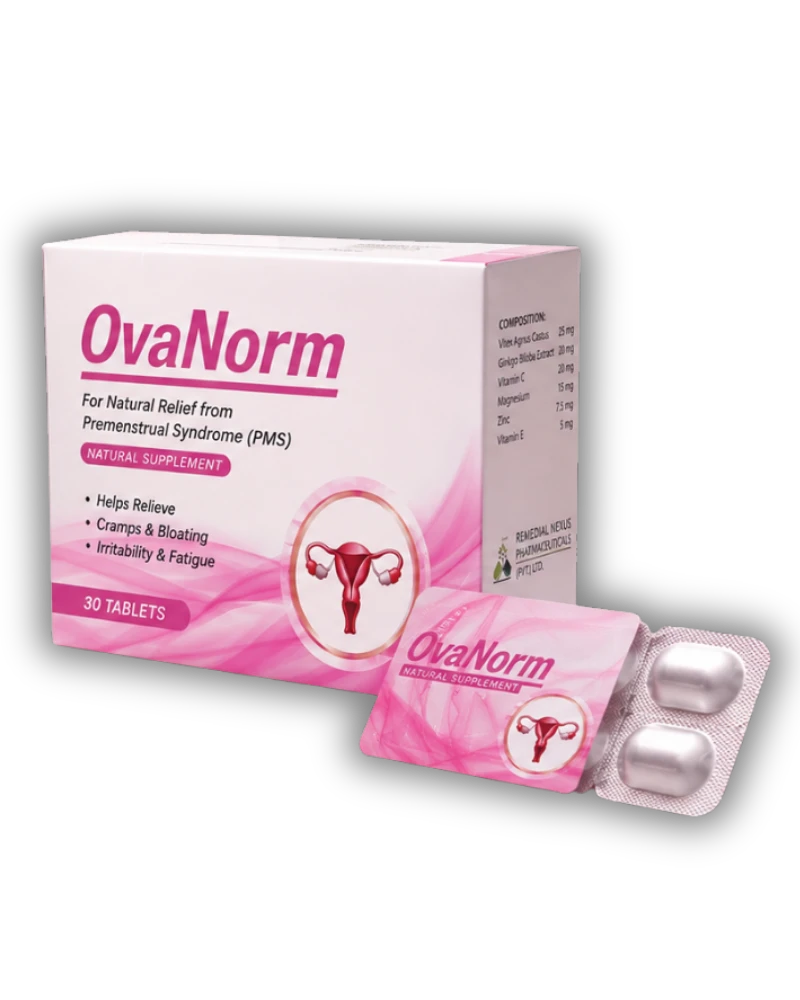
OvaNorm
A daily nutritional supplement formulated with Magnesium, Calcium, Zinc, Vitamin C, Vitex and Ginkgo Biloba to support hormonal balance and muscle comfort during your cycle.
Rs. 1,450 · Cash on delivery across Pakistan · Discreet packaging · 3–5 days
FDA and DRAP approved. It is a supplement, not a medicine. Speak to your doctor before starting.
Frequently asked questions
Periods mein thakan kyun hoti hai? (Why do we feel tired during periods?)
Kyunke khoon kam hota hai (iron gir jata hai), prostaglandins se dard hota hai, hormones badalte hain, aur aksar raat ko neend poori nahi hoti. Yeh sab mila kar thakan barha dete hain.
Is period fatigue normal?
Mild to moderate fatigue is very normal, especially on days 1-2. If it’s severe, lasts after your period ends, or comes with breathlessness and paleness, it may be iron deficiency and needs checking.
How can I get energy back during my period?
Rest, hydrate, eat iron-rich food with vitamin C, do gentle movement like walking, fix sleep, and cut back on excess caffeine. Small things done consistently help most.
Kya iron goli se thakan kam hoti hai? (Do iron tablets help with period fatigue?)
Agar iron ki kami hai to zaroor madad karti hain. Lekin bina test ke khud lena behtar nahi. Pehle ferritin aur haemoglobin check karwa ke doctor se dose pooch lein.
Can lack of sleep make period fatigue worse?
Yes, badly. Cramps and pain disrupt sleep, poor sleep makes pain feel worse and drains energy more. Heating pad, early bedtime and dark room help break this cycle.
When should I worry about period fatigue?
Worry if you’re breathless on stairs, faint, have very heavy bleeding, pale, or exhausted even weeks after your period ends. Get blood tests done in these cases.
References
- NHS UK — Iron deficiency anaemia
- Mayo Clinic — Dysmenorrhea
- ACOG — Painful periods
- WHO — Anaemia
- PubMed — Menstruation and fatigue
Medical disclaimer: This article is for general education only and is not medical advice. OvaNorm is a dietary supplement, not a medicine. It is not intended to diagnose, treat, cure or prevent any disease. Always consult a qualified doctor before starting any supplement, especially if you are pregnant, breastfeeding, under 18, or taking other medication. Individual results vary.
