
Blog
Iron and Periods: Preventing Tiredness and Anaemia

Quick answer: Every period loses iron, and heavy periods can drain stores faster than food replaces them. Early signs are constant tiredness, breathlessness on stairs, paleness and hair loss. Prevent it by eating iron-rich food (liver, beef, chana, masoor dal, dates) with vitamin C, keeping tea away from meals, and getting a ferritin blood test if symptoms persist.
DRAP Approved
Cash on Delivery
Nationwide Delivery
Medical author for Remedial Nexus. Published:
Table of Contents
- Why periods drain iron
- Early signs most women miss
- Iron-rich Pakistani foods
- How to absorb more iron
- A weekly iron plan
- When to see a doctor
- Frequently asked questions (Urdu & English)
- References
Why periods drain iron
Iron is the mineral that carries oxygen in your blood. Every millilitre of blood you lose during a period takes iron with it. Over months and years, that loss adds up.
A normal period loses about 30–40 ml of blood. A heavy period can lose double or triple that. The body can replace small losses from food, but it cannot keep up with repeated heavy loss — and that is how iron deficiency develops quietly.[1]
Early signs most women miss
Iron deficiency does not appear overnight. It moves through stages, and the earliest stages have no anaemia yet — which is exactly why they are missed.
| Stage | What is happening | What you feel |
|---|---|---|
| Stage 1 | Stores (ferritin) fall but haemoglobin is normal | Mild tiredness, poor exercise tolerance |
| Stage 2 | Iron supply to bone marrow drops | Constant fatigue, hair shedding, brittle nails |
| Stage 3 | Mild anaemia develops | Breathlessness on stairs, paleness, dizziness |
| Stage 4 | Moderate to severe anaemia | Palpitations, headaches, poor concentration, fainting |
Iron-rich Pakistani foods
There are two kinds of iron in food. Haem iron from meat is absorbed very well. Non-haem iron from plants is absorbed less well, but vitamin C transforms it. Both matter.
| Food | Iron type | Approx. iron | Best paired with |
|---|---|---|---|
| Liver (kaleji) | Haem | 6–9 mg per 100 g | Lemon, tomato |
| Beef | Haem | 2–3 mg per 100 g | Any vitamin C source |
| Mutton | Haem | 2–3 mg per 100 g | Salad with lemon |
| Chicken thigh | Haem | 1–1.5 mg per 100 g | Vegetables |
| Sardines / small fish | Haem | 2–3 mg per 100 g | Lemon |
| Masoor dal | Non-haem | 3–4 mg per bowl | Lemon, tomato |
| Chana | Non-haem | 2–3 mg per bowl | Guava, orange |
| Palak / saag | Non-haem | 2–3 mg per bowl | Tomato, lemon |
| Khajoor (dates) | Non-haem | 1–2 mg per 4 dates | Milk (but separate from iron tablets) |
| Gur (jaggery) | Non-haem | 1–2 mg per 20 g | Small amounts only |
| Eggs | Mixed | 1 mg per egg | Any meal |
| Fortified atta | Non-haem | Varies | Check the label |
How to absorb more iron
Eating iron is only half the job. Absorption is where most women lose the benefit — usually because of tea.
| Habit | Effect on absorption | Do this instead |
|---|---|---|
| Tea or coffee with meals | Cuts absorption by up to 60% | Drink 1 hour before or after food |
| Vitamin C with the meal | Can double or triple absorption | Lemon, tomato, guava, orange |
| Calcium with iron | Competes for absorption | Keep milk and iron tablets 2 hours apart |
| Phytates in whole grains | Reduce absorption | Soak, sprout or ferment grains and dals |
| Cooking in iron cookware | Adds small amounts of iron | Use an iron karahi when possible |
| Taking iron on an empty stomach | Best absorption for tablets | Take with water, or with fruit if it upsets you |
| Antacids and PPIs | Reduce iron absorption | Discuss timing with your doctor |
Do this
Avoid this
A weekly iron plan
- Monday: Masoor dal with lemon and tomato, plus a guava. Non-haem iron doubled by vitamin C.
- Tuesday: Chicken or beef with vegetables, and a glass of lemon water. No tea with the meal.
- Wednesday: Chana chaat with tomato and onion, followed by an orange.
- Thursday: Palak or sarson saag cooked with tomato, served with roti and dahi.
- Friday: Liver or beef curry with salad. This is the highest-iron meal of the week.
- Saturday: Khichdi with dal, plus dates as a snack.
- Sunday: Fish or mutton with vegetables, and fruit afterwards.
- Every day: Keep tea at least one hour away from your main iron meal.
Iron needs support, not guesswork
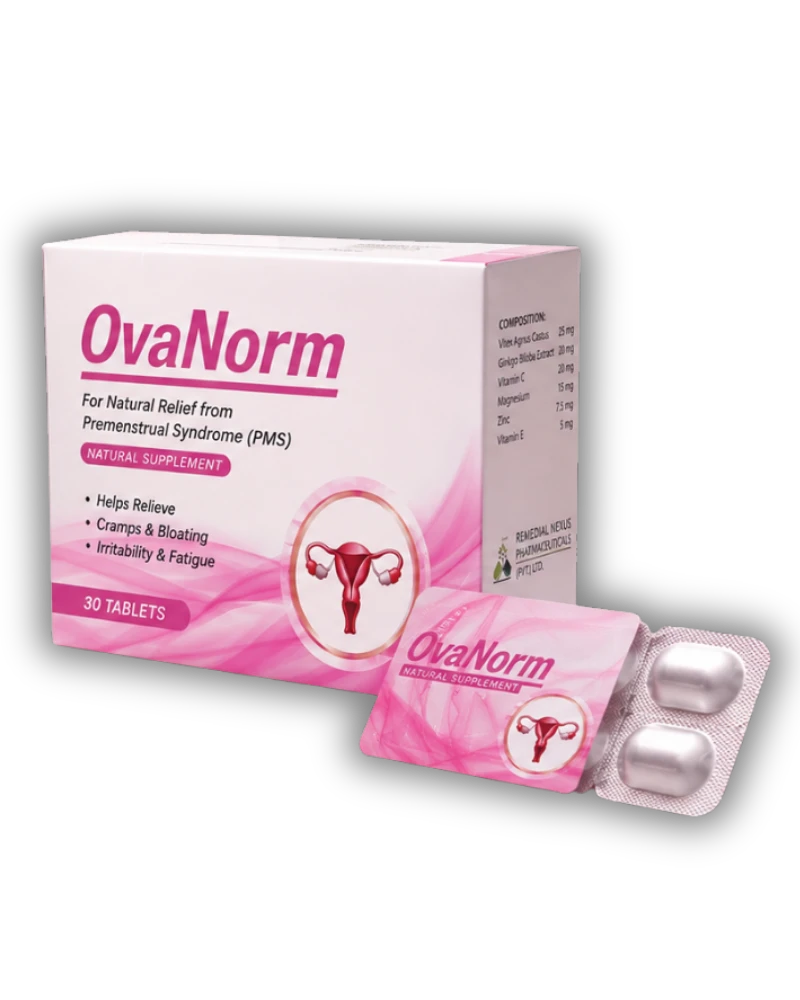
Iron tablets should be prescribed after a blood test, not guessed. Alongside iron, OvaNorm combines magnesium, calcium, zinc and vitamin C with Vitex and Ginkgo Biloba to support hormonal balance and comfort during the cycle. It supports normal function; it does not treat anaemia.
When to see a doctor
Iron deficiency is common, treatable and worth taking seriously. If you have been tired for months, a simple blood test is a far better next step than another cup of tea.
OvaNorm
A daily nutritional supplement formulated with Magnesium, Calcium, Zinc, Vitamin C, Vitex and Ginkgo Biloba to support hormonal balance and comfort during your cycle.
Rs. 1,450 · Cash on delivery across Pakistan · Discreet packaging · 3–5 days
FDA and DRAP approved. It is a supplement, not a medicine. Speak to your doctor before starting.
Frequently asked questions
Periods ke doran iron kyun zaroori hai? (Why is iron important during periods?)
Har period mein khoon ke sath iron nikalta hai. Agar loss zyada ho aur khuraak se poora na ho, to iron stores khatam hone lagte hain — jis se thakan, balon ka jhadna aur anaemia hoti hai. Is liye iron wali khuraak rozana zaroori hai.
What is the difference between haem and non-haem iron?
Haem iron comes from meat, poultry and fish and is absorbed very well. Non-haem iron comes from plants like dal, chana and spinach and is absorbed less well — but vitamin C greatly improves it. That is why lemon or guava with a dal meal matters so much.
Kya chai iron ko kam karti hai? (Does tea reduce iron absorption?)
Haan, bohat zyada. Chai mein tannins hote hain jo iron ke absorption ko 60% tak kam kar sakte hain. Chai khane ke sath na peeyein — khane ke aik ghanta pehle ya baad mein behtar hai.
Which Pakistani food has the most iron?
Liver (kaleji) is the richest, followed by beef and mutton. Among plant foods, masoor dal, chana and palak are excellent, especially when eaten with lemon or tomato. Dates and gur also add iron but contain sugar, so use them in small amounts.
Kya iron ki goli khud le sakti hoon? (Can I take iron tablets on my own?)
Behtar hai pehle blood test karwayein. Zyada iron bina zaroorat lena nuksan deh ho sakta hai. Agar test se kami saabit ho to doctor ki tajweez ki gayi dose lein — aam tor par 3–6 mahine tak, kyunke stores bharna zaroori hai.
How long does it take to fix iron deficiency?
You may feel better in two to four weeks, but stores take three to six months to refill. Stopping early is the most common reason the tiredness returns. Retest after treatment to confirm the ferritin has recovered before you stop.
References
- NHS UK — Iron deficiency anaemia
- World Health Organization — Anaemia
- National Institutes of Health — Iron fact sheet
- PubMed — Menstrual blood loss and iron status
- Mayo Clinic — Iron deficiency anaemia
- NHS UK — Heavy periods
Medical disclaimer: This article is for general education only and is not medical advice. OvaNorm is a dietary supplement, not a medicine. It is not intended to diagnose, treat, cure or prevent any disease. Always consult a qualified doctor before starting any supplement, especially if you are pregnant, breastfeeding, under 18, or taking other medication. Individual results vary.
