

Blog
Diet for Period Cramps: What to Eat and What to Avoid

Quick answer: To reduce period cramps, eat magnesium-rich food (spinach, sarson saag, almonds, banana), iron-rich food (liver, beef, chana, dates), calcium-rich food (doodh, dahi, lassi), and anti-inflammatory ginger and turmeric. Avoid very salty food, deep-fried snacks, excess sugar, strong chai with meals and fizzy drinks. Start these changes in the week before your period.
DRAP Approved
Cash on Delivery
Nationwide Delivery
Medical author for Remedial Nexus. Published:
Table of Contents
- Why diet affects period cramps
- Foods that reduce cramps
- Foods that make cramps worse
- What to eat each week of your cycle
- A simple Pakistani meal plan
- When food alone is not enough
- Frequently asked questions (Urdu & English)
- References
Why diet affects period cramps
Patients often look surprised when I ask about their diet for period pain. But food has a direct effect on two things that drive cramps: muscle tension and inflammation.
Minerals like magnesium and calcium help muscles relax. Iron prevents the tiredness that makes pain feel worse. Too much salt, sugar and caffeine do the opposite — they increase tension, bloating and inflammation.[1]
Foods that reduce cramps
These foods are easy to find in Pakistan and are already part of most household cooking. You do not need anything imported or expensive.
| Nutrient | Pakistani foods to eat | How it helps |
|---|---|---|
| Magnesium | Palak, sarson saag, badam, peanuts, kela, whole wheat roti | Relaxes the womb muscle, reduces cramp severity |
| Calcium | Doodh, dahi, lassi, small fish with bones | Steadies mood and reduces cramp intensity |
| Iron | Liver, beef, chana, masoor dal, khajoor (dates) | Prevents tiredness and anaemia |
| Omega-3 fats | Walnuts, flaxseed, fish oil, mustard oil | Lowers inflammation |
| Ginger | Fresh adrak in tea and cooking | Anti-inflammatory, reduces pain |
| Turmeric | Haldi in curries and daal | Anti-inflammatory support |
| Vitamin C | Orange, guava, lemon, tomato | Helps iron absorption and tissue repair |
| Fibre | Chana, daal, vegetables, fruit | Reduces bloating and constipation |
Foods that make cramps worse
These are very common in Pakistani diets and routines — and reducing them makes a real difference.
| Food or drink | Why it worsens cramps | What to do |
|---|---|---|
| Achar, namkeen, chips, packet soups | High salt causes water retention and bloating | Reduce in the week before your period |
| Cola, soda and energy drinks | Gas, sugar spikes and caffeine together | Replace with lemon water or lassi |
| Four to six cups of strong chai | Caffeine increases tension and disturbs sleep | Cut to one or two cups, none after 4 pm |
| Tea with meals | Blocks iron absorption from food | Drink tea between meals, not with them |
| Deep-fried snacks (samosay, pakoray) | Increase inflammation | Choose fruit, nuts or dahi instead |
| Excess sugar and sweets | Blood sugar swings worsen mood and pain | Keep sweets occasional |
| Very cold drinks during the period | May increase muscle tension for some women | Prefer warm or room-temperature water |
| Alcohol | Worsens inflammation and sleep | Avoid completely |
| Skipping meals | Low blood sugar increases irritability and pain | Eat every 3–4 hours |
Eat more
Limit
What to eat each week of your cycle
Your needs change slightly across the month. Matching food to the phase gives better results than just being careful during the period.
| Cycle phase | Days | Focus on |
|---|---|---|
| After period | Day 6–13 | Iron and protein to rebuild: liver, beef, chana, daal, eggs |
| Around ovulation | Day 14–16 | Antioxidant fruit and vegetables, plenty of water |
| Mid-luteal | Day 17–24 | Start magnesium and calcium daily: palak, badam, doodh, dahi |
| Late luteal (PMS) | Day 25–28 | Magnesium, calcium, less salt, less caffeine, steady meals |
| Period days | Day 1–5 | Warm food, ginger, iron, magnesium, plenty of water |
Filling the gaps
Food always comes first. But when meals are irregular, or life is busy, a supplement can help supply magnesium, calcium, zinc and vitamin C consistently. OvaNorm combines these with Vitex and Ginkgo Biloba to support hormonal balance and comfort during the cycle. It supports normal function; it does not replace a balanced diet.
A simple Pakistani meal plan
Breakfast
Two eggs or a bowl of chana, whole wheat roti, one glass of doodh or lassi, a handful of almonds or peanuts. This single meal fixes most nutrient gaps.
Lunch
Roti with daal or sabzi, a bowl of dahi, and a salad with cucumber and tomato. Add palak or sarson saag two to three times a week.
Dinner (early)
Light khichdi or roti with chicken or fish, cooked with adrak and haldi. Finish two to three hours before sleeping.
When food alone is not enough
Diet is powerful, but it cannot treat endometriosis, fibroids or PCOS. If your pain does not follow a normal pattern, food is an addition to medical care, not a replacement for it.
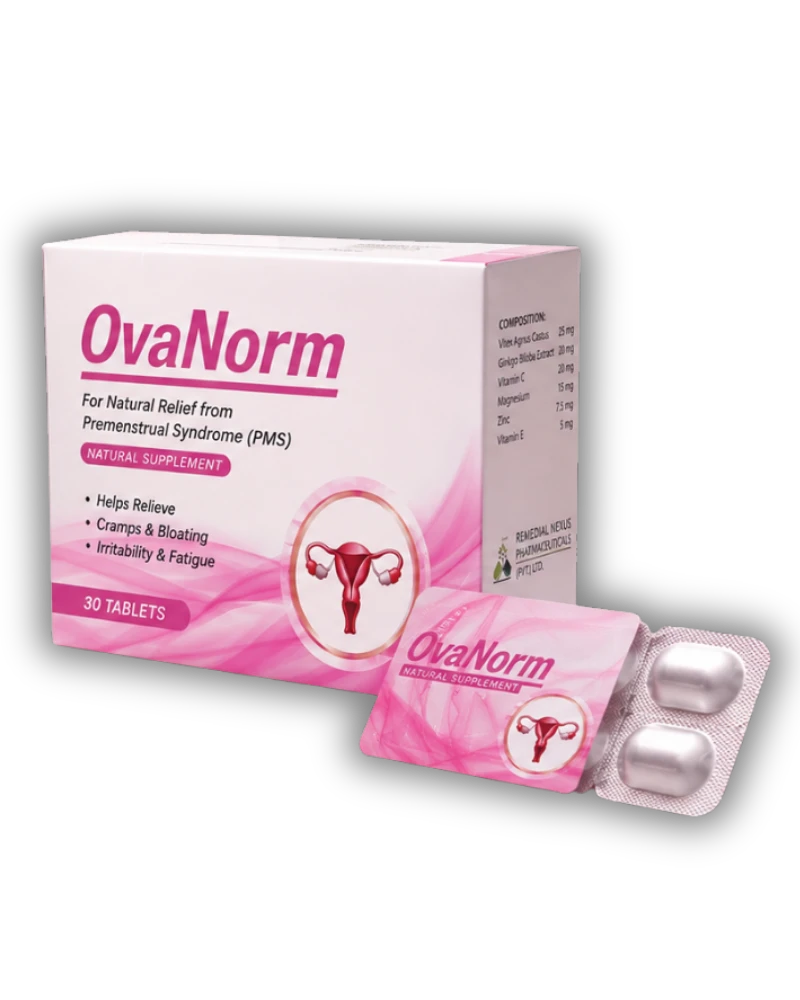
OvaNorm
A daily nutritional supplement formulated with Magnesium, Calcium, Zinc, Vitamin C, Vitex and Ginkgo Biloba to support hormonal balance and muscle comfort during your cycle.
Rs. 1,450 · Cash on delivery across Pakistan · Discreet packaging · 3–5 days
FDA and DRAP approved. It is a supplement, not a medicine. Speak to your doctor before starting.
Frequently asked questions
Period ke dard ke liye kya khana chahiye? (What should I eat for period cramps?)
Sab se ahem magnesium wali khuraak: palak, sarson saag, badam, peanuts aur kela. Iske saath doodh, dahi, lassi (calcium), chana, daal, khajoor (iron), aur adrak-haldi wali sabzi. Namak, chai aur cold drinks kam karein.
Does diet really help period cramps?
Yes. Magnesium, calcium and omega-3 fats have good evidence for reducing cramp severity, and iron prevents the tiredness that makes pain feel worse. Reducing salt, sugar and caffeine also clearly helps bloating and tension. Diet is not instant, but it works over one to two cycles.
Kya chai peene se period ka dard barhta hai? (Does chai make period pain worse?)
Bohat zyada chai se haan. Caffeine se tension barhti hai aur neend kharab hoti hai, jo dard ko tez mehsoos karwata hai. Agar aap din mein 4–6 cups peeti hain to ise 1–2 cups tak le aayen, aur sham 4 baje ke baad bilkul na peeyein. Sath hi chai khane ke sath na peeyein — yeh iron ko rok leti hai.
Should I avoid cold drinks during my period?
Fizzy drinks like cola are best avoided because of the gas, sugar and caffeine. Very cold drinks make some women feel more tense in the belly. Warm or room-temperature water is usually more comfortable and helps cramps.
How long before diet changes show a result?
Usually one to two cycles. Magnesium and calcium build up in the body over time, so give each change at least two months before deciding it did not help. Track your pain levels so you can see the improvement.
Do I need expensive imported food or supplements?
No. Palak, sarson saag, badam, peanuts, kela, doodh, dahi, chana and daal cover everything you need, and they are all local and affordable. Expensive imported products are not required for good period nutrition.
References
- PubMed — Magnesium and primary dysmenorrhea
- PubMed — Calcium and premenstrual syndrome
- PubMed — Omega-3 fatty acids and menstrual pain
- NHS UK — Period pain
- Mayo Clinic — Menstrual cramps
- World Health Organization — Healthy diet
Medical disclaimer: This article is for general education only and is not medical advice. OvaNorm is a dietary supplement, not a medicine. It is not intended to diagnose, treat, cure or prevent any disease. Always consult a qualified doctor before starting any supplement, especially if you are pregnant, breastfeeding, under 18, or taking other medication. Individual results vary.
