

Blog
PMS vs Pregnancy Symptoms: How to Tell the Difference

Quick answer: PMS and early pregnancy share bloating, breast tenderness, tiredness and mood changes, so they are easy to confuse. The key difference is timing: PMS symptoms settle within a few days of your period starting, while pregnancy symptoms continue and your period does not come. If your period is late, a pregnancy test is the only reliable way to know.
DRAP Approved
Cash on Delivery
Nationwide Delivery
Medical author for Remedial Nexus. Published:
Table of Contents
- Why they are so easy to confuse
- Symptoms they share
- The real differences
- When and how to test
- Other reasons your period is late
- When to see a doctor
- Frequently asked questions (Urdu & English)
- References
Why they are so easy to confuse
This is one of the most common worries I see in clinic. A woman feels bloated, her breasts are sore, she is tired and emotional, and she thinks: “Is this my period coming, or am I pregnant?”
The confusion is completely understandable, because both PMS and early pregnancy are driven by the same hormones — oestrogen and progesterone. When those hormones shift, the body reacts in similar ways.[1]
Symptoms they share
These symptoms appear in both PMS and early pregnancy, so they cannot tell you on their own.
| Symptom | PMS | Early pregnancy |
|---|---|---|
| Bloating | Common | Common |
| Breast tenderness | Common | Very common |
| Tiredness | Common | Very common |
| Mood changes | Common | Common |
| Food cravings | Common | Common |
| Headache | Common | Possible |
| Lower belly cramps | Common | Possible (implantation) |
| Nausea | Occasional | Common |
The real differences
There are a few clues that point one way or the other. Look at the pattern over time, not a single day.
| Feature | PMS | Early pregnancy |
|---|---|---|
| Timing | 3–7 days before period | After a missed period |
| What happens next | Bleeding starts, symptoms fade | No period, symptoms continue |
| Nausea | Rare | Often, especially in the morning |
| Breast change | Tender, then settles | Tender, darker areola, more veins |
| Tiredness level | Mild to moderate | Often much deeper |
| Duration | Days | Weeks and continuing |
| Test result | Negative | Positive |
When and how to test
Home pregnancy tests measure a hormone called hCG, which the body makes after a fertilised egg implants. It takes time to build up, so testing too early gives a false negative.
- Wait until your period is actually late. The first day of a missed period is the best time. Testing 5–7 days after that is even more reliable.
- Use the first urine of the morning. hCG is most concentrated then, so the test is most accurate.
- Follow the instructions exactly. Do not read the result after the time window given — it can show a false line.
- If negative and still no period, wait 3 days and test again. Levels double quickly in early pregnancy.
- If positive, see a doctor. Do not start any supplement or medicine without medical advice.
- If you are unsure, get a blood test. A blood hCG test is more sensitive than a urine test.
Other reasons your period is late
Pregnancy is not the only reason for a late period. In my practice, these are the other common causes — and they matter just as much.
Stress
Exams, family pressure, grief or a big change can delay ovulation and shift your whole cycle. This is very common among students in Pakistan.
Weight change
Losing or gaining weight quickly, or eating very little, can stop ovulation for a month or more.
PCOS
Polycystic ovary syndrome causes irregular or missed periods in many women. It needs proper diagnosis and management.
Thyroid problems
An over- or under-active thyroid can make periods late, light or heavy. A simple blood test checks this.
Recent illness or medicine
Fever, infection, some medicines and even a recent vaccination can delay a period by a few days.
Perimenopause
After about age 40, cycles naturally become irregular as hormone levels change.
A note on supplements
If you are trying to conceive — or think you may be pregnant — do not start any supplement (including OvaNorm) without speaking to a doctor first. Nutritional support can help general cycle comfort, but pregnancy is the one time when you should take nothing without medical advice.
When to see a doctor
Most causes of a late period are manageable, and most are far easier to treat when found early. There is no need to worry alone.
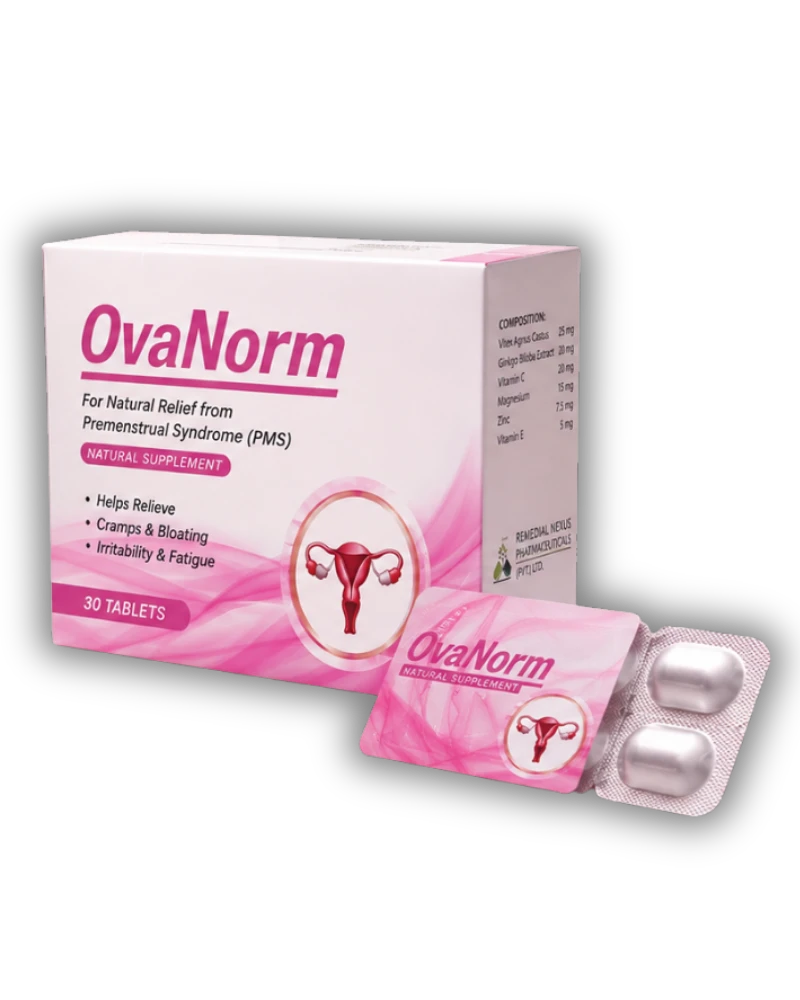
OvaNorm
A daily nutritional supplement formulated with Vitex, Magnesium, Calcium, Zinc, Vitamin C and Ginkgo Biloba to support hormonal balance and comfort during your cycle.
Rs. 1,450 · Cash on delivery across Pakistan · Discreet packaging · 3–5 days
FDA and DRAP approved. It is a supplement, not a medicine. Speak to your doctor before starting.
Frequently asked questions
Kya PMS aur pregnancy ke symptoms alag hote hain? (Are PMS and pregnancy symptoms different?)
Kuch had tak. Dono mein pet phoolna, breast mein dard, thakan aur mood aam hain, is liye sirf symptoms dekh kar farq batana mushkil hai. Asal farq timing ka hai: PMS period shuru hone par kam ho jate hain, jabke pregnancy mein period nahi aata aur symptoms barhte rehte hain.
How early can I take a pregnancy test?
The earliest reliable time is the first day of a missed period. Testing before that often gives a false negative because the hCG hormone has not built up enough. If the test is negative and your period still has not come, wait three days and test again.
Can I be pregnant and still get PMS symptoms?
Early pregnancy can feel very much like PMS — bloating, sore breasts, tiredness and mood changes are all common. That is exactly why symptoms alone cannot tell you. If your period is late, take a test.
Period late hai lekin test negative — kya karun? (My period is late but the test is negative — what should I do?)
Pehle teen din baad dobara test karein. Agar phir bhi negative ho aur period na aaye, to doctor se milein. Stress, weight change, PCOS aur thyroid ki wajah se bhi period late ho sakta hai — yeh sab janchne ke liye aik simple blood test kaafi hota hai.
Could a late period be caused by stress?
Yes, definitely. Stress affects the hormone that triggers ovulation, so it can delay your period by several days or even cause you to miss one. This is very common during exams, family pressure or grief.
Should I take a supplement while trying to conceive?
Speak to a doctor first. General cycle support supplements are not a treatment for fertility, and if you may already be pregnant, you should take nothing without medical advice. Pregnancy is the one time when “ask first” is a firm rule.
References
- NHS UK — Early signs of pregnancy
- NHS UK — Premenstrual syndrome (PMS)
- Mayo Clinic — Home pregnancy tests
- PubMed — Menstrual cycle and early pregnancy symptoms
- American College of Obstetricians and Gynecologists — Early pregnancy
- World Health Organization — Reproductive health
Medical disclaimer: This article is for general education only and is not medical advice. OvaNorm is a dietary supplement, not a medicine. It is not intended to diagnose, treat, cure or prevent any disease. Always consult a qualified doctor before starting any supplement, especially if you are pregnant, breastfeeding, under 18, or taking other medication. Individual results vary.
