

Blog
PMS Symptoms: The Full List and When to See a Doctor

Quick answer: PMS symptoms usually appear 3 to 7 days before a period and settle once bleeding starts. They include mood changes, irritability, bloating, breast tenderness, headaches, tiredness, food cravings and cramps. Most women manage them with sleep, movement, magnesium-rich food and less caffeine. See a doctor if symptoms are severe enough to disrupt work, study or relationships every month.
DRAP Approved
Cash on Delivery
Nationwide Delivery
Medical author for Remedial Nexus. Published:
Table of Contents
- What is PMS?
- The full symptom list
- When symptoms appear and fade
- Normal PMS vs PMDD
- What actually helps
- When to see a doctor
- Frequently asked questions (Urdu & English)
- References
What is PMS?
PMS stands for premenstrual syndrome. It is the group of physical and emotional symptoms that appear in the days before a period. The word premenstrual simply means “before the period”.
In my clinic, many women describe PMS as “just my mood” or “just feeling heavy” and do not realise it has a name and a clear pattern. Studies suggest that up to 3 in 4 women of reproductive age experience some PMS symptoms at some point.[1]
The full symptom list
PMS symptoms are usually grouped into physical and emotional. Most women get a mix of both, and the exact pattern can change from cycle to cycle.
| Physical symptoms | Emotional symptoms |
|---|---|
| Bloating and weight gain | Irritability and short temper |
| Breast tenderness and swelling | Low mood or sadness |
| Headache or migraine | Anxiety and worry |
| Tiredness and low energy | Difficulty concentrating |
| Cramps in the lower belly | Feeling overwhelmed |
| Joint or muscle pain | Crying easily |
| Food cravings (sweet, salty) | Sleep problems |
| Constipation or loose motions | Withdrawal from people |
| Spotty skin (acne) | Low interest in usual activities |
| Swelling in hands and feet | Anger or frustration |
When symptoms appear and fade
One of the most useful things I tell patients is that PMS has a clock. If you track it for two months, you will start to predict it — and a problem you can predict is a problem you can plan around.
| Cycle phase | Days | What most women notice |
|---|---|---|
| After period ends | Day 6–13 | Energy returns, mood is steady |
| Around ovulation | Day 14–16 | Often the best days of the month |
| Mid-luteal | Day 17–24 | Symptoms begin gently |
| Late luteal | Day 25–28 | Peak PMS: mood, bloating, tiredness |
| Period starts | Day 1–3 | PMS fades, cramps may remain |
Normal PMS vs PMDD
A small number of women have symptoms so severe that they affect work, study and relationships every single month. This is called PMDD (premenstrual dysphoric disorder), and it is a recognised medical condition — not a personality flaw.
| Feature | Normal PMS | PMDD |
|---|---|---|
| Severity | Uncomfortable but manageable | Severe, hard to function |
| Mood | Irritable, a bit low | Deep sadness, anger, hopelessness |
| Effect on life | Some inconvenience | Work, study and relationships suffer |
| Sleep | Slightly disturbed | Markedly disturbed |
| Duration | 3–7 days | 1–2 weeks |
| Who to see | Self-care, pharmacist | Doctor — treatment is available |
What actually helps
These measures help the majority of women with ordinary PMS. Start a week before your period, not on the day it begins.
- Sleep on a fixed schedule. Going to bed and waking at the same time reduces mood symptoms more than most women expect.
- Move your body daily. A 20-minute walk or light yoga releases mood-lifting chemicals and eases bloating.[2]
- Eat magnesium-rich food. Spinach, sarson saag, almonds, peanuts and banana help both mood and cramps.[3]
- Steady your blood sugar. Eat regular meals with protein (daal, eggs, dahi) and avoid long gaps and sugary snacks.
- Cut back on caffeine and salt. Strong chai, cola and very salty food worsen anxiety and bloating.
- Add calcium-rich food. Doodh, dahi and lassi are linked with milder PMS mood symptoms.[4]
- Plan lighter days. Do not schedule big exams, meetings or events in your PMS week if you can avoid it.
Do this
Avoid this
Where a supplement fits
When diet and sleep alone are not enough, a targeted supplement can support the body through the PMS window. OvaNorm combines Vitex (chasteberry), magnesium, calcium, zinc, vitamin C and Ginkgo Biloba to support hormonal balance, mood and muscle comfort before and during your period. It supports normal function; it is not a medicine and does not replace medical care.
When to see a doctor
PMS is common, but some patterns deserve a proper medical review. Please see a doctor if you notice any of these.
PMDD and severe PMS are treatable. There is no need to accept them as a permanent part of life.
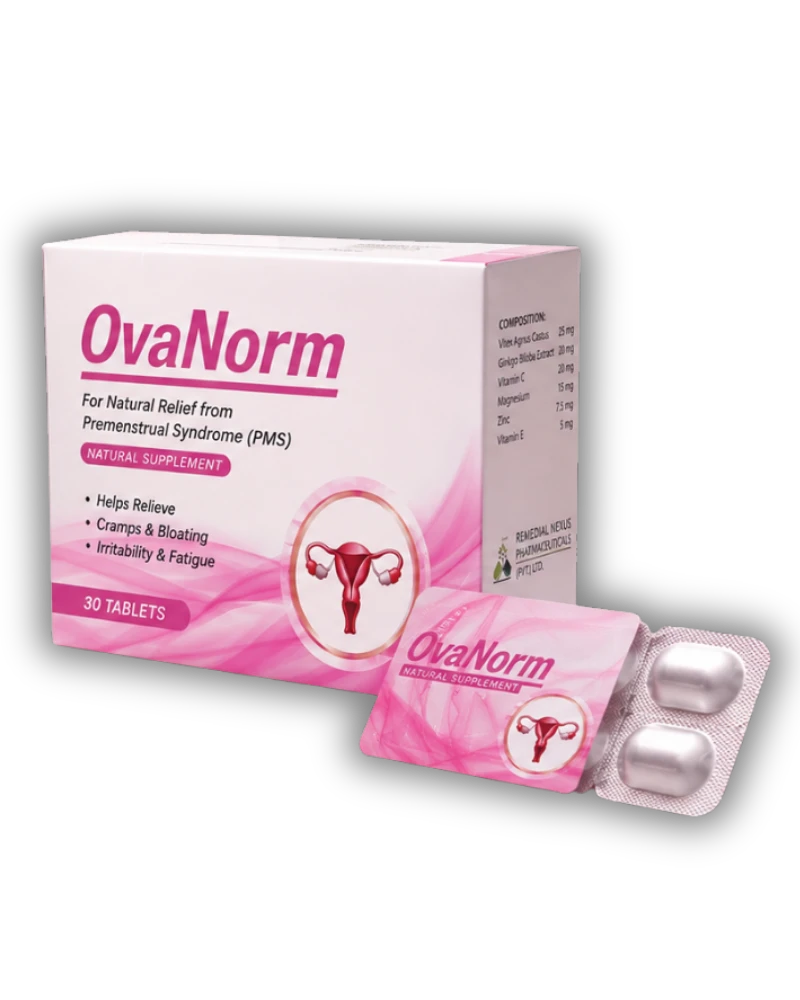
OvaNorm
A daily nutritional supplement formulated with Vitex, Magnesium, Calcium, Zinc, Vitamin C and Ginkgo Biloba to support hormonal balance and comfort before and during your period.
Rs. 1,450 · Cash on delivery across Pakistan · Discreet packaging · 3–5 days
FDA and DRAP approved. It is a supplement, not a medicine. Speak to your doctor before starting.
Frequently asked questions
PMS ke symptoms kitne din pehle shuru hote hain? (How many days before my period do PMS symptoms start?)
Aam tour par 3 se 7 din pehle. Kuch khatoon mein 10 din pehle bhi shuru ho jate hain. Period shuru hone ke baad aam tour par 1 se 2 din mein symptoms kam ho jate hain.
Is PMS a real medical condition?
Yes. PMS is recognised in medical guidelines, and the severe form (PMDD) is a recognised disorder with proper treatment options. It is not “just in your head” and it is not a weakness.
Can PMS be a sign of pregnancy?
Some symptoms overlap (bloating, breast tenderness, tiredness), so it can be confusing. The key difference is timing: PMS symptoms settle within a few days of the period starting, while pregnancy symptoms continue and a period is missed. If your period is late, take a pregnancy test or see a doctor.
Kya PMS ka koi ilaj hai? (Is there a treatment for PMS?)
Haan. Zyada tar khatoon ko behtar neend, halki exercise, magnesium aur calcium wali khuraak, aur caffeine kam karne se farq parta hai. Shadeed (PMDD) surat mein doctor se ilaj mumkin hai. Supplement support ka kaam karta hai, ilaj ka nahi.
How long do PMS symptoms last?
Typically 3 to 7 days, ending once the period begins. In PMDD, symptoms can last 1 to 2 weeks. If symptoms last more than two weeks in every cycle, see a doctor.
Should I take a supplement for PMS?
Food and sleep come first. If diet is irregular or you need extra support in the PMS window, a supplement containing magnesium, calcium and Vitex may help. Magnesium in high doses can cause loose motions, so follow the label and ask a doctor if you take other medicines.
References
- NHS UK — Premenstrual syndrome (PMS)
- PubMed — Exercise and PMS symptoms
- PubMed — Magnesium and premenstrual syndrome
- PubMed — Calcium and premenstrual syndrome
- Mayo Clinic — Premenstrual syndrome
- World Health Organization — Women’s health
Medical disclaimer: This article is for general education only and is not medical advice. OvaNorm is a dietary supplement, not a medicine. It is not intended to diagnose, treat, cure or prevent any disease. Always consult a qualified doctor before starting any supplement, especially if you are pregnant, breastfeeding, under 18, or taking other medication. Individual results vary.
