

Blog
Period Pain and Back Pain: Why They Come Together

Quick answer: Period pain and lower back pain come together because the womb and the lower back share the same nerve supply. The womb tilts backwards in many women, so its contractions pull on the ligaments that support it and the pain is felt in the back. Heat, gentle movement, posture care and magnesium-rich food help both together.
DRAP Approved
Cash on Delivery
Nationwide Delivery
Medical author for Remedial Nexus. Published:
Table of Contents
- Why they come together
- The nerve link explained
- Two kinds of back pain in your cycle
- Relief for both together
- Posture and daily habits
- When back pain is a warning sign
- Frequently asked questions (Urdu & English)
- References
Why they come together
Many women tell me the same thing: “Doctor, it is not only my stomach. My whole back hurts too.” They often assume the back pain is separate, perhaps from sitting badly or from a heavy workload.
Usually it is the same problem. Period cramps and lower back pain during a period share a common nerve supply, so the brain receives the pain signal from the lower belly and the lower back together.[1]
The nerve link explained
The womb is supplied by nerves that come from the same part of the spinal cord as the lower back — roughly the level of the lower spine. Medical people call this referred pain: the problem is in one place, but you feel it in another.
This is also why the pain can spread to the upper thighs and the tops of the legs. It is one signal travelling along one set of nerves.
Two kinds of back pain in your cycle
Not all back pain in your cycle is the same. Knowing which one you have changes what helps.
| Feature | Cramp-related back pain | Muscle strain back pain |
|---|---|---|
| When it happens | Day 1–2 of the period | Any time, often after activity |
| Where | Lower back, both sides, spreads to thighs | One spot, often one side |
| With movement | Slightly better with gentle walking | Worse with certain movements |
| With heat | Clearly better | Helps a little |
| With period ending | Goes away | Continues |
| Cause | Womb contractions, shared nerves | Posture, lifting, weak core muscles |
| What helps | Heat, rest, magnesium, gentle movement | Physiotherapy, posture work, strengthening |
Relief for both together
Because the belly and back share the same nerve signal, treating both at once gives the best result.
- Heat the back as well as the belly. Use a hot water bottle on the lower back for 20 minutes, then on the belly. This is the single most effective step.[2]
- Walk slowly for 15 minutes. Movement improves blood flow and releases the body’s own pain relief. It helps back pain more than lying still.
- Try a knee-to-chest stretch. Lie on your back, bring both knees to your chest, hold 20 seconds, release. Repeat five times. This eases lower back tension.
- Use a warm bath or shower. If you have hot water, ten minutes on the lower back before bed helps sleep and pain together.
- Eat magnesium-rich food. Spinach, sarson saag, almonds, peanuts and banana help muscles relax.[3]
- Support your lower back when sitting. A small cushion behind the lower back keeps the spine in a better position.
- Avoid very high heels during your period. They tilt the pelvis and increase lower back strain.
- Sleep on your side with a pillow between the knees. This keeps the lower back in a neutral position overnight.
Do this
Avoid this
Posture and daily habits
If your back pain continues beyond your period, posture and core strength are usually involved. These everyday habits make a real difference.
Sitting
Keep feet flat on the floor, back supported, screen at eye level. Avoid sitting bent over for hours, especially if you sew, study or use a computer.
Lifting
Bend your knees, not your back, and hold the weight close to your body. Twisting while lifting is the most common cause of a strain.
Core strength
Gentle strengthening of the belly and back muscles protects the spine. Even ten minutes of light exercise a few times a week helps.
Support for the cycle
When diet and rest alone are not enough, a nutritional supplement can support muscle comfort through your period. OvaNorm combines magnesium, calcium, zinc, vitamin C, Vitex and Ginkgo Biloba to support hormonal balance and comfort during the cycle. It supports normal function; it is not a medicine.
When back pain is a warning sign
Cramp-related back pain is normal. But some back pain patterns need a proper check. Please see a doctor if you notice any of these.
Most period-related back pain settles with heat, movement and rest. But pain that follows a different pattern deserves proper attention, not another month of waiting.
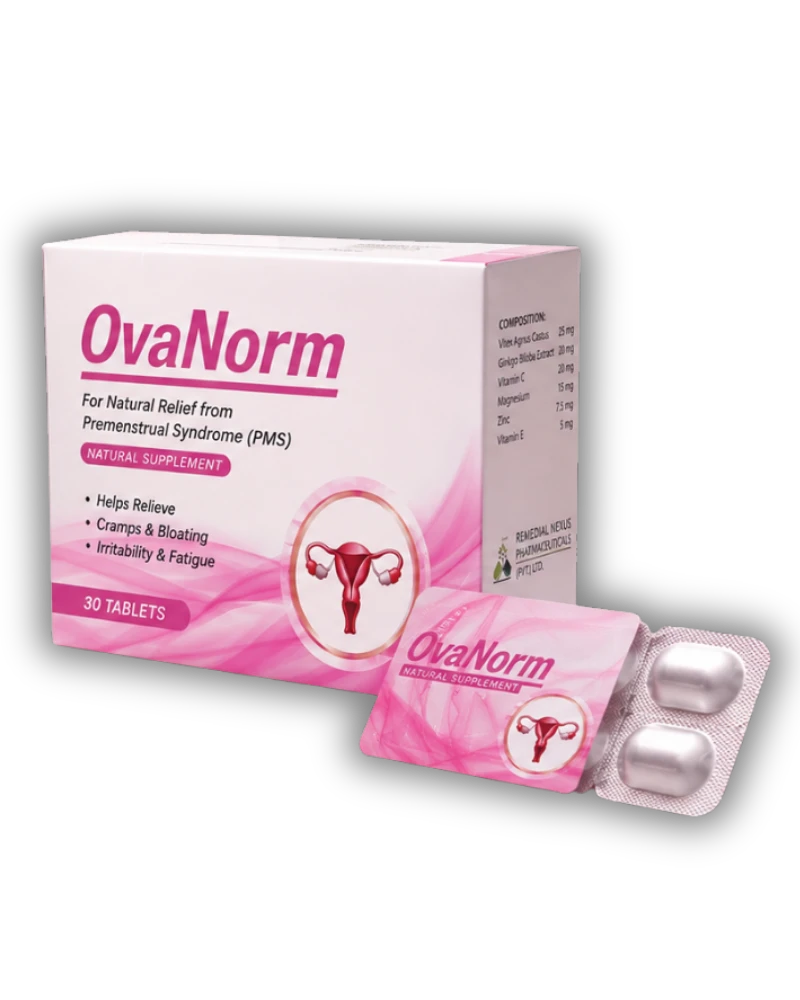
OvaNorm
A daily nutritional supplement formulated with Magnesium, Calcium, Zinc, Vitamin C, Vitex and Ginkgo Biloba to support hormonal balance and muscle comfort during your cycle.
Rs. 1,450 · Cash on delivery across Pakistan · Discreet packaging · 3–5 days
FDA and DRAP approved. It is a supplement, not a medicine. Speak to your doctor before starting.
Frequently asked questions
Periods ke waqt kamar dard kyun hota hai? (Why does my back hurt during my period?)
Bachadani (womb) aur kamar ki lower back ko aik hi nerves supply karti hain. Jab bachadani mein contraction hoti hai, wahi signal kamar mein bhi mehsoos hota hai. Isi ko referred pain kehte hain. Is liye dard sirf pet tak mehdood nahi rehta.
Is period back pain a sign of something serious?
Usually no. Cramp-related back pain that comes with your period and goes away when it ends is normal. But back pain that continues after your period, gets worse each month, or shoots down your leg with numbness should be checked by a doctor.
Should I put heat on my back or my stomach?
Both. Most women only heat the belly, but heating the lower back gives a lot of relief because the pain signal comes from the same nerves. Try 20 minutes on the back, then 20 minutes on the belly.
Kya exercise se kamar ka dard theek hota hai? (Does exercise help period back pain?)
Haan, halki exercise se behtar hota hai. 15 minute slow walk aur knee-to-chest stretch kamar ki tension kam karte hain. Bohat zyada sakht exercise na karein — aur agar dard tez ho to ruk jayein.
Why does my back pain spread to my legs?
The same nerve supply that reaches the womb also reaches the upper thighs. So the pain signal can be felt in the back, the belly and the tops of the legs together. It is one signal, not three separate problems.
When should I see a doctor about period back pain?
See a doctor if the pain continues after your period, gets worse each month, shoots down one leg with numbness, comes with fever, or comes with very heavy bleeding. Any of these needs a proper examination rather than home treatment.
References
- Mayo Clinic — Menstrual cramps
- NHS UK — Period pain
- PubMed — Referred pain and pelvic nerve supply
- PubMed — Heat therapy for dysmenorrhea
- American College of Obstetricians and Gynecologists — Dysmenorrhea
- World Health Organization — Menstrual health
Medical disclaimer: This article is for general education only and is not medical advice. OvaNorm is a dietary supplement, not a medicine. It is not intended to diagnose, treat, cure or prevent any disease. Always consult a qualified doctor before starting any supplement, especially if you are pregnant, breastfeeding, under 18, or taking other medication. Individual results vary.
