

Blog
What Is Dysmenorrhea? A Simple Guide for Pakistani Women

Quick answer: Dysmenorrhea (say: dis-men-or-EE-ah) is the medical word for painful periods. There are two types: primary dysmenorrhea, which is ordinary period pain with no underlying disease, and secondary dysmenorrhea, which is pain caused by a condition such as endometriosis or fibroids. Most ordinary period pain responds well to heat, movement, sleep and magnesium-rich food.
DRAP Approved
Cash on Delivery
Nationwide Delivery
Medical author for Remedial Nexus. Published:
Table of Contents
- What the word means
- The two types of dysmenorrhea
- Why the pain happens
- How to tell the two types apart
- What helps
- When to see a doctor
- Frequently asked questions (Urdu & English)
- References
What the word means
When a woman in my clinic says “doctor, my periods are very painful”, the medical note I write is dysmenorrhea. It comes from three Greek words: dys (difficult or painful), meno (month), and rrhea (flow). So it literally means “painful monthly flow”.
There is nothing complicated hidden in the word. It is simply a medical label for period pain — and having a label matters, because it lets us talk about it clearly, research it, and treat it.
The two types of dysmenorrhea
This is the most important thing to understand, because the two types need different approaches.
| Feature | Primary dysmenorrhea | Secondary dysmenorrhea |
|---|---|---|
| What it is | Ordinary period pain with no underlying disease | Pain caused by a condition |
| When it starts | Within 1–2 years of first period | Often later, or gets worse over time |
| Typical cause | Prostaglandins making the womb contract | Endometriosis, fibroids, adenomyosis, infection |
| Pattern | Peaks day 1–2, eases by day 3 | Longer, heavier, worsening each cycle |
| Response to heat/rest | Usually helps | Often helps little |
| Treatment | Self-care, simple painkillers | Treat the underlying cause |
| Fertility effect | None | Sometimes — depends on the cause |
Why the pain happens
In primary dysmenorrhea, the womb releases chemicals called prostaglandins. These make the womb muscle tighten to shed its lining. When prostaglandin levels are high, the contractions are strong and reduce blood flow to the muscle — which is what you feel as cramping pain.
This is why the pain usually starts on the first day, peaks in the first 24–48 hours, and then fades: prostaglandin levels fall as the period continues.[1]
How to tell the two types apart
You cannot diagnose yourself, but you can notice the pattern. These clues suggest the pain may be secondary and should be checked.
What helps
For primary dysmenorrhea, the evidence supports simple measures first. Most women do not need anything complicated.
| Measure | How to use it | Why it helps |
|---|---|---|
| Heat | Hot water bottle 20–30 min, from day 1 | Relaxes the womb muscle, improves blood flow |
| Movement | Slow walk 15–20 min daily | Improves blood flow, releases natural pain relief |
| Magnesium food | Spinach, sarson saag, almonds, banana | Helps muscle relaxation |
| Hydration | 8–10 glasses of water | Reduces cramp intensity |
| Sleep | Fixed bedtime every night | Lowers pain sensitivity |
| Less caffeine | Cut strong chai and cola | Reduces tension and palpitations |
| Painkiller | Occasional, as advised | Blocks prostaglandins |
Nutritional support for the cycle
For women who want extra support alongside diet and rest, OvaNorm combines magnesium, calcium, zinc, vitamin C, Vitex and Ginkgo Biloba to support hormonal balance and muscle comfort during the cycle. It supports normal function and is not a medicine or a treatment for any disease.
When to see a doctor
See a doctor if your pain fits the secondary pattern above, if it stops you from studying or working every month, or if it no longer responds to simple measures. Conditions like endometriosis and fibroids are far easier to manage when found early.
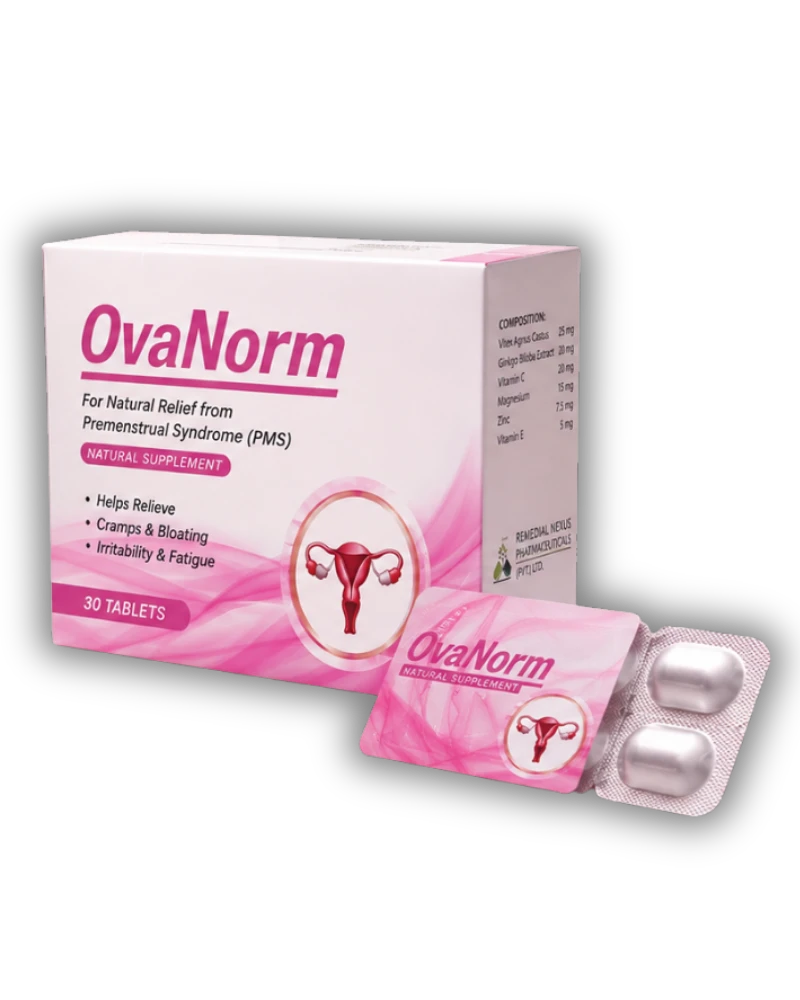
OvaNorm
A daily nutritional supplement formulated with Vitex, Magnesium, Calcium, Zinc, Vitamin C and Ginkgo Biloba to support hormonal balance and muscle comfort during your cycle.
Rs. 1,450 · Cash on delivery across Pakistan · Discreet packaging · 3–5 days
FDA and DRAP approved. It is a supplement, not a medicine. Speak to your doctor before starting.
Frequently asked questions
Dysmenorrhea ka matlab kya hai? (What does dysmenorrhea mean?)
Dysmenorrhea ka matlab hai mahwari ke dard — yani periods ke waqt hone wala dard. Yeh koi alag bimari ka naam nahi, balke dard ki medical terminology hai. Iski do qismein hain: primary (aam dard) aur secondary (kisi bimari ki wajah se).
Is dysmenorrhea dangerous?
Primary dysmenorrhea is not dangerous — it is ordinary period pain. Secondary dysmenorrhea is a sign that something else is going on, such as endometriosis or fibroids. That is why worsening or unusual pain should be checked. The pain itself is not the danger — the untreated cause can be.
Kya dysmenorrhea se infertility hoti hai? (Does dysmenorrhea cause infertility?)
Primary dysmenorrhea se fertility par koi asar nahi hota. Lekin secondary dysmenorrhea ki wajah banne wali kuch conditions (jaise endometriosis ya PCOS) fertility ko mutasir kar sakti hain agar unka ilaj na ho. Is liye barhta hua dard zaroor check karwayein.
Does everyone with period pain have dysmenorrhea?
In medical terms, yes — any painful period is dysmenorrhea. But most cases are primary and manageable with simple measures. The word sounds serious, but it usually describes something very ordinary.
Can I treat it at home?
For primary dysmenorrhea, yes — heat, movement, hydration, sleep and magnesium-rich food help most women. If pain is severe, lasts longer than three days, or gets worse each month, see a doctor rather than continuing to self-treat.
Which type do I have?
You cannot tell for certain without a medical review. A simple clue: primary pain starts in your teens, peaks on day 1–2 and eases by day 3. Secondary pain often starts later, lasts longer and gets worse. If in doubt, get it checked.
References
- Mayo Clinic — Menstrual cramps (dysmenorrhea)
- NHS UK — Period pain
- PubMed — Primary dysmenorrhea: pathophysiology
- American College of Obstetricians and Gynecologists — Dysmenorrhea: painful periods
- Cochrane Library — Interventions for period pain
- World Health Organization — Menstrual health
Medical disclaimer: This article is for general education only and is not medical advice. OvaNorm is a dietary supplement, not a medicine. It is not intended to diagnose, treat, cure or prevent any disease. Always consult a qualified doctor before starting any supplement, especially if you are pregnant, breastfeeding, under 18, or taking other medication. Individual results vary.
