

Blog
How to Reduce Period Pain Naturally: 10 Methods That Work

Quick answer: Heat, gentle movement, magnesium-rich food, good sleep and less caffeine are the most reliable natural ways to reduce period pain. Start heat on day one before the pain peaks, walk for 15 minutes, eat spinach, sarson saag, almonds and banana, drink plenty of water, and cut back on strong chai. Most women notice a clear difference within one or two cycles.
DRAP Approved
Cash on Delivery
Nationwide Delivery
Medical author for Remedial Nexus. Published:
Table of Contents
- Why natural methods work
- The 10 methods that help most
- What the research shows
- Natural methods vs painkillers
- Your first-month plan
- When natural relief is not enough
- Frequently asked questions (Urdu & English)
- References
Why natural methods work
Many women come to my clinic asking for a stronger painkiller when the real answer is simpler. Period pain has two main drivers: muscle tension in the womb, and inflammation caused by chemicals called prostaglandins. Both respond very well to ordinary daily habits.
Natural methods are not a weak alternative. For mild to moderate period pain, several everyday measures have been studied properly and work as well as simple painkillers for many women.[1] They also carry no risk of stomach problems or overuse.
The 10 methods that help most
These are listed in the order I usually suggest them. Start with the first four — they are free, safe and do most of the work.
- 1. Heat on the lower belly, started early. A hot water bottle or warm cloth for 20–30 minutes relaxes the muscle and improves blood flow. Use it on day one, before the pain reaches its peak. Research has found heat can match a mild painkiller for many women.[2]
- 2. Walk for 15 minutes. Slow walking, not hard exercise. Movement improves blood flow and releases the body’s own pain-relieving chemicals. Lying still often makes cramps feel worse.
- 3. Eat magnesium-rich food. Spinach, sarson saag, almonds, peanuts, banana and whole wheat roti all help muscles relax. Magnesium is one of the best-studied nutrients for period pain and PMS.[3]
- 4. Drink 8–10 glasses of water. Dehydration makes cramps stronger. In Pakistani weather this is very easy to miss, especially in summer.
- 5. Cut back on strong chai and sugary drinks. Too much caffeine and sugar increases tension, palpitations and bloating. Four to five cups a day is common here and works against you.
- 6. Protect your sleep. Poor sleep makes the brain more sensitive to pain. A regular sleep time makes a real difference in one to two cycles.
- 7. Try gentle stretching or yoga. Child pose, cat-cow and a simple knee-to-chest stretch ease lower back and belly tension. Ten minutes is enough.
- 8. Eat ginger and turmeric in food. Both have anti-inflammatory properties studied for period pain.[4] Add ginger to tea, and turmeric to curries and daal.
- 9. Reduce very salty and deep-fried food. These increase water retention, bloating and heaviness in the days before your period.
- 10. Manage stress before and during your period. Stress raises tension and makes cramps feel stronger. Slow breathing for five minutes, or even a quiet walk, helps more than people expect.
What the research shows
These are not old wives’ tales. The main natural methods have been studied, and the results are consistent across studies.
| Method | Evidence level | Typical effect | Best started |
|---|---|---|---|
| Heat (hot water bottle) | Good — several trials | Pain clearly reduced, similar to a mild painkiller | Day 1, before it peaks |
| Exercise / walking | Good — multiple studies | Lower pain scores, better mood | Throughout the cycle |
| Magnesium | Moderate to good | Less cramp severity and PMS symptoms | Daily, one week before |
| Ginger | Moderate | Reduced pain intensity | Day 1 onwards |
| Turmeric | Emerging | Anti-inflammatory support | In daily cooking |
| Sleep improvement | Moderate | Lower pain sensitivity | Every night |
Natural methods vs painkillers
Many women ask whether they should just take a painkiller instead. There is no single right answer, but this comparison helps.
| Feature | Natural methods | Simple painkillers |
|---|---|---|
| Speed of relief | Slower — 20–40 minutes | Faster — 20–30 minutes |
| Best for | Mild to moderate pain | Moderate to strong pain |
| Side effects | Very few | Stomach upset, kidney strain with long use |
| Cost | Almost free | Small, but repeats monthly |
| Works on the cause | Yes — reduces tension and inflammation | No — mainly blocks pain signals |
| Safe to use monthly | Yes | Occasional use is fine; monthly use needs advice |
| Can combine | Yes | Yes, but ask a pharmacist about timing |
Do this
Avoid this
Your first-month plan
Natural relief works best when it is planned, not improvised in the middle of a bad day. Here is a simple month-long plan.
Week 1–2 (before period)
Add one magnesium-rich food each day. Cut one cup of chai. Set a regular sleep time. Walk 15 minutes daily.
Day 1–2 (period starts)
Heat on the belly from the morning. Warm water and ginger tea. Slow walking. Light, warm food.
Day 3–5 (pain eases)
Keep walking and hydrating. Rest well. Note what helped so you can repeat it next cycle.
What to eat during your period
| Goal | Eat more | Limit |
|---|---|---|
| Relax muscles (magnesium) | Spinach, sarson saag, almonds, peanuts, banana | — |
| Reduce inflammation | Ginger, turmeric, walnuts | Deep-fried snacks, too much sugar |
| Reduce tiredness (iron) | Liver, beef, chana, masoor dal, dates | Tea with meals (blocks iron) |
| Steady mood (calcium) | Doodh, dahi, lassi, small fish | — |
| Reduce bloating | Water, cucumber, melon, plain rice | Very salty food, cold drinks |
Nutritional support, in the right place
Food should always come first. When diet alone is not enough — for example when life is busy and meals are irregular — a supplement can help fill the gap. OvaNorm combines magnesium, calcium, zinc, vitamin C, Vitex and Ginkgo Biloba to support hormonal balance and muscle comfort during your cycle. It supports normal function; it does not replace food or medical care.
When natural relief is not enough
Natural methods help most women, but they are not a cure for everything. Please see a doctor if you notice any of the following.
These can point to conditions such as endometriosis, fibroids or PCOS, which are much easier to manage when found early. Natural methods and medical care work best together, not instead of each other.
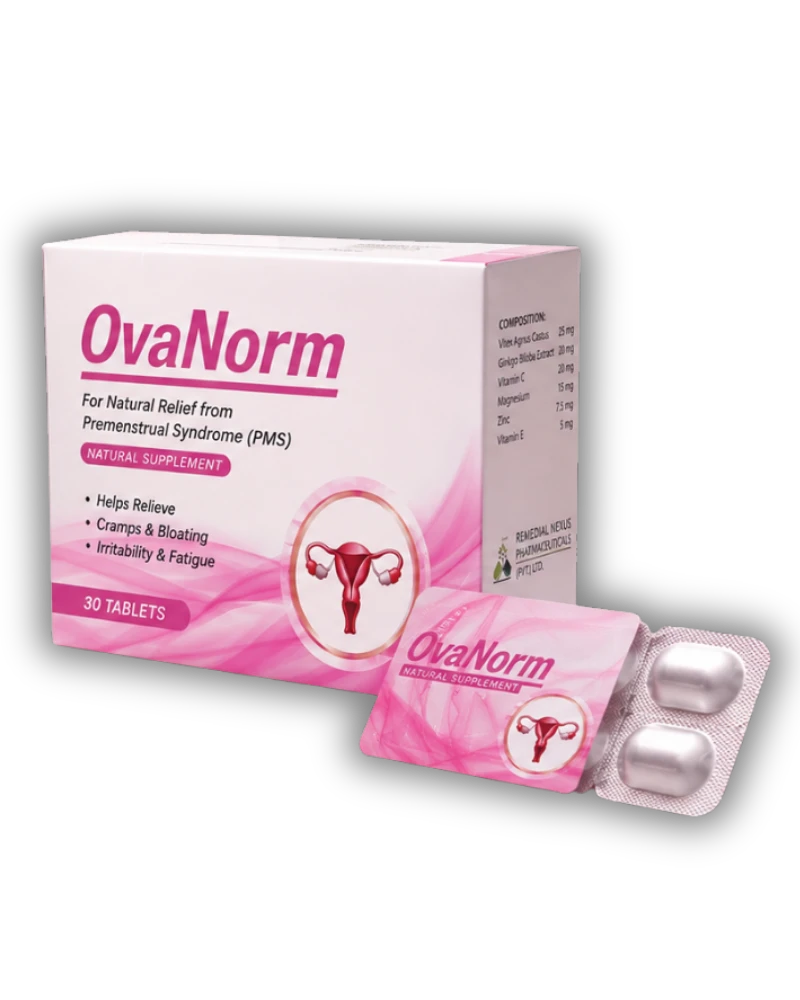
OvaNorm
A daily nutritional supplement formulated with Vitex, Magnesium, Calcium, Zinc, Vitamin C and Ginkgo Biloba to support hormonal balance and muscle comfort during your cycle.
Rs. 1,450 · Cash on delivery across Pakistan · Discreet packaging · 3–5 days
FDA and DRAP approved. It is a supplement, not a medicine. Speak to your doctor before starting.
Frequently asked questions
Period pain naturally kam karne ka sab se behtareen tarika kya hai? (What is the best way to reduce period pain naturally?)
Sab se pehle garam paani ki bottle se pait par sekaai karein, aur dard barhne se pehle hi shuru karein. Iske saath halki walk, paani zyada, aur magnesium wali khuraak (palak, badam, kela) lein. Chai aur cold drinks kam karein. In chaar cheezon se hi bohat farq parta hai.
Do natural remedies really work, or is it just placebo?
Yeh sirf placebo nahi hain. Garam sekaai aur exercise par kaafi research ho chuki hai, aur studies mein inka asar simple painkiller ke barabar paaya gaya hai. Magnesium aur adrak par bhi research hai. Albatta, yeh mamooli dard ke liye behtar hain — shadeed dard ke liye doctor se milna zaroori hai.
Can I combine natural methods with a painkiller?
Yes, for most healthy women this is safe. Heat, rest and good food work alongside a simple painkiller without a problem. If you need a painkiller every single month, though, it is better to find out why your pain is strong. Ask a doctor or pharmacist about the right dose and timing.
How long before I see a difference?
Most women notice a clear change after one to two cycles of consistent habits. Natural methods build up over time — they are not instant. Give each change at least two months before deciding it did not work.
Kya magnesium ka supplement lena chahiye? (Should I take a magnesium supplement?)
Pehle khuraak se magnesium lene ki koshish karein. Agar aap ki khuraak mukammal nahi, ya aap bohat busy hain, to supplement madad kar sakta hai. Magnesium ki zyada miqdaar se loose motions ho sakte hain, is liye munasib miqdaar lein aur doctor se mashwara karein.
Is it safe to exercise during my period?
Yes, gentle exercise usually helps. Slow walking, stretching and light yoga reduce cramps by improving blood flow. Avoid very heavy or exhausting exercise in the first two days if you feel weak or dizzy. Listen to your body.
References
- NHS UK — Period pain
- Cochrane Library — Non-surgical interventions for period pain
- PubMed — Magnesium and primary dysmenorrhea
- PubMed — Ginger and turmeric for menstrual pain
- Mayo Clinic — Menstrual cramps
- World Health Organization — Menstrual health
Medical disclaimer: This article is for general education only and is not medical advice. OvaNorm is a dietary supplement, not a medicine. It is not intended to diagnose, treat, cure or prevent any disease. Always consult a qualified doctor before starting any supplement, especially if you are pregnant, breastfeeding, under 18, or taking other medication. Individual results vary.
