

Blog
Dehydration and Period Cramps: The Simple Link

Quick answer: Even mild dehydration makes period cramps worse because water is needed for blood flow, muscle function and the removal of inflammatory chemicals. When you are short of water, the womb muscle cramps more strongly and headaches and tiredness increase. Aim for 8 to 10 glasses of water a day, more in hot weather, and start early in the day rather than drinking it all at once.
DRAP Approved
Cash on Delivery
Nationwide Delivery
Medical author for Remedial Nexus. Published:
Table of Contents
- Why water affects cramps
- Signs you are dehydrated
- How much water you need
- Hydration habits that work
- Drinks that make it worse
- When to see a doctor
- Frequently asked questions (Urdu & English)
- References
Why water affects cramps
This is one of those things that sounds too simple to matter. But when a patient tells me her cramps are unbearable, one of the first questions I ask is how much water she drank that day. Very often the answer is: almost none.
Water is not a cure for period pain, but it genuinely changes how pain feels. It keeps blood flowing to the womb, helps muscles contract and relax normally, and allows the kidneys to clear the inflammatory chemicals that drive cramps.[1]
Signs you are dehydrated
Thirst is a late signal. By the time you feel thirsty, you are usually already slightly short of fluid. Watch for these earlier signs instead.
| Sign | What it means | What to do |
|---|---|---|
| Dark yellow urine | Concentrated urine, mild dehydration | Drink two glasses now |
| Urine less than 4 times a day | Not enough fluid intake | Increase steadily through the day |
| Dry mouth and lips | Early dehydration | Sip water, avoid tea |
| Headache in the afternoon | Often dehydration, not stress | Water before painkillers |
| Dizziness on standing | Low blood volume | Sit, then drink slowly |
| Constipation | Fluid needed for healthy bowels | Water plus fibre |
| Dry skin and dull eyes | Long-standing low intake | Build a daily routine |
| Muscle cramps in legs | Electrolyte and fluid loss | Water with a pinch of salt and lemon |
How much water you need
The old advice of eight glasses is a reasonable starting point, but your real need depends on your body, the weather and what else you drink.
| Situation | Daily water target | Notes |
|---|---|---|
| Normal weather, light activity | 8–10 glasses (2–2.5 L) | Spread across the whole day |
| Hot Pakistani summer | 10–14 glasses (2.5–3.5 L) | Add a pinch of salt and lemon |
| During your period | 10–12 glasses | Extra fluid replaces what is lost |
| While fasting | Same total, split between iftar and sehri | Avoid very salty food at iftar |
| Breastfeeding | 12–14 glasses | Milk production uses a lot of water |
| Heavy sweating or outdoor work | 12–16 glasses | Replace salts as well as water |
| Air-conditioned office | 8–10 glasses | Cool air still dehydrates you |
Hydration habits that work
- Drink a glass before your morning chai. Starting the day with water sets the tone. Chai first thing is a diuretic, not a hydrator.
- Keep a one-litre bottle in sight. Aim to finish it before lunch and refill it for the afternoon. Visible water gets drunk; hidden water does not.
- Drink a glass with every meal. Three meals means three guaranteed glasses without any effort or memory.
- Sip through the day, not in one go. Large amounts at once are mostly passed out in urine. Small frequent amounts are absorbed.
- Add lemon or mint if plain water is boring. Flavour makes it easier to drink more. Avoid adding sugar.
- Drink before you feel thirsty. Thirst is a late signal, especially in air conditioning where you do not notice sweating.
- Increase during your period. Add two extra glasses on the heaviest days to replace fluid loss.
- Watch your urine colour at least once a day. Pale straw is the target.
Do this
Avoid this
Drinks that make it worse
| Drink | Effect on hydration | Verdict |
|---|---|---|
| Water | Best hydration | Main drink, all day |
| Lassi (unsweetened) | Water plus protein and calcium | Excellent, one a day |
| Coconut water | Water plus potassium | Very good, especially in heat |
| Lemon water | Water plus a little vitamin C | Very good |
| Ginger tea | Warm, soothing, mild anti-inflammatory | Good, 2–3 cups |
| Milk | Hydrating and nourishing | Good, 1–2 glasses |
| Strong chai | Mild diuretic effect | Limit to 1–2 cups |
| Coffee | Diuretic, can worsen tension | Limit during period |
| Cola and energy drinks | Sugar, caffeine, gas | Avoid |
| Alcohol | Clear diuretic, worsens sleep | Avoid completely |
Hydration plus nutrition
Water helps, but cramps also depend on minerals. OvaNorm combines magnesium, calcium, zinc and vitamin C with Vitex and Ginkgo Biloba to support hormonal balance and muscle comfort during the cycle. It supports normal function; it is not a medicine.
When to see a doctor
Hydration is the cheapest and most overlooked part of period care. It will not fix a medical cause of pain, but for ordinary cramps it makes a real difference, starting today.
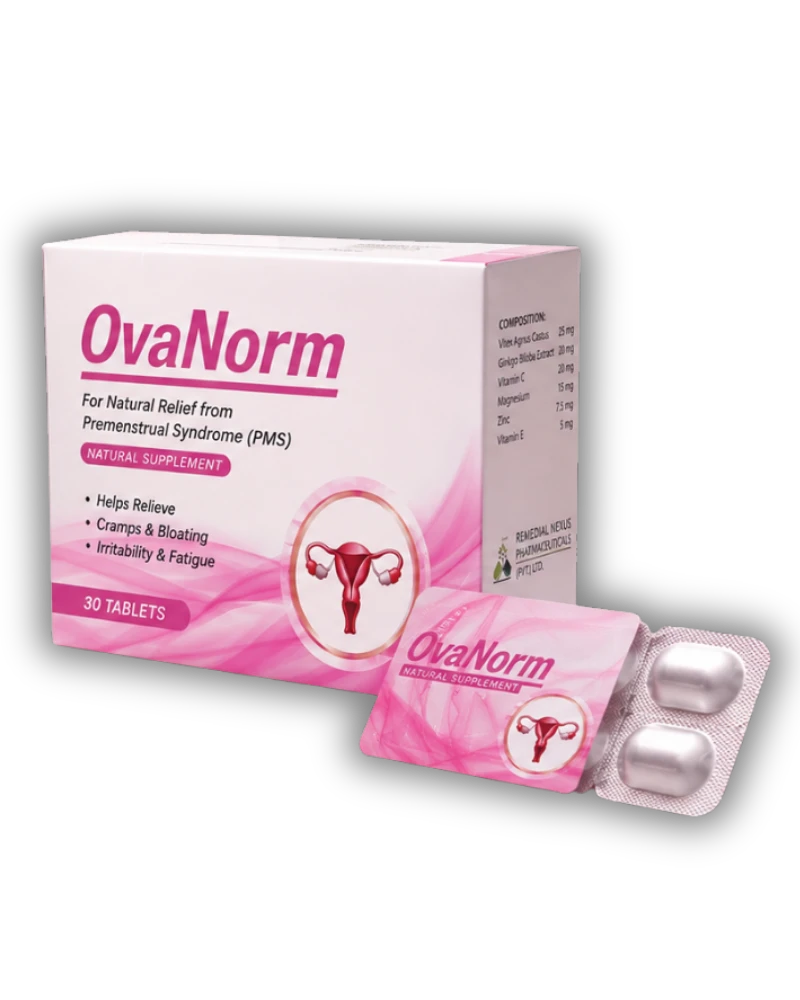
OvaNorm
A daily nutritional supplement formulated with Magnesium, Calcium, Zinc, Vitamin C, Vitex and Ginkgo Biloba to support hormonal balance and muscle comfort during your cycle.
Rs. 1,450 · Cash on delivery across Pakistan · Discreet packaging · 3–5 days
FDA and DRAP approved. It is a supplement, not a medicine. Speak to your doctor before starting.
Frequently asked questions
Kya paani kam peene se period ke dard barh jate hain? (Does drinking less water worsen period cramps?)
Haan, kuch had tak. Paani ki kami se khoon ka bahao kam ho jata hai, muscle zyada tight rehti hai, aur dard paida karne wale chemicals jald nikal nahi paate. Is liye period ke doran 10–12 glass paani peeyein.
How much water should I drink during my period?
Aim for 10 to 12 glasses on period days, slightly more than usual, especially on the heaviest days. If the weather is hot or you are sweating, increase further. Spread it through the day rather than drinking a lot at once.
Kya chai paani ki kami poori karti hai? (Does chai replace water?)
Nahi. Chai mein caffeine hota hai jo peshab zyada laata hai, is liye yeh paani ka kaam nahi karti. Din mein 1–2 cup chai theek hai, lekin uske ilawa saada paani zaroor peeyein. Subah chai se pehle aik glass paani behtar hai.
Does drinking water reduce period pain?
It does not remove the cause of pain, but it clearly reduces how severe cramps feel for many women. Water supports blood flow, muscle function and the clearance of inflammatory chemicals. Combined with heat and magnesium, the effect is noticeable.
Kya nimbu paani period mein acha hai? (Is lemon water good during periods?)
Haan, nimbu paani bohat acha hai. Yeh paani ke sath thora vitamin C deta hai, jo iron ko absorb karne mein madad karta hai. Cheeni na daalein aur thanda na rakhein — normal temperature par behtar hai.
Can dehydration cause a missed period?
Severe dehydration and illness can stress the body enough to delay ovulation, which may delay a period. However, this is uncommon with ordinary dehydration. If your period is late, consider pregnancy, stress, weight change and thyroid problems first, and take a test.
References
- NHS UK — How much water should you drink?
- Mayo Clinic — Water: How much should you drink every day?
- PubMed — Hydration and muscle function
- PubMed — Dehydration and pain perception
- American College of Obstetricians and Gynecologists — Dysmenorrhea
- World Health Organization — Water and health
Medical disclaimer: This article is for general education only and is not medical advice. OvaNorm is a dietary supplement, not a medicine. It is not intended to diagnose, treat, cure or prevent any disease. Always consult a qualified doctor before starting any supplement, especially if you are pregnant, breastfeeding, under 18, or taking other medication. Individual results vary.
