

Blog
Mood Swings Before Periods: Why They Happen and What Helps

Quick answer: Mood swings before a period are caused by falling oestrogen and progesterone levels in the week before bleeding starts. These hormones affect the brain chemicals that control mood, sleep and stress. Regular sleep, daily movement, steady meals, magnesium and calcium-rich food and less caffeine help most women feel noticeably steadier.
DRAP Approved
Cash on Delivery
Nationwide Delivery
Medical author for Remedial Nexus. Published:
Table of Contents
- Why mood changes before your period
- What is happening in the brain
- What is normal and what is not
- Simple ways to feel steadier
- How family can help
- When to see a doctor
- Frequently asked questions (Urdu & English)
- References
Why mood changes before your period
Nearly every woman I see has, at some point, said something like: “Doctor, one week of the month I am not myself. I get angry over small things, and then I feel guilty.”
This is one of the most common and least discussed parts of PMS. Mood swings before a period are real, they are hormonal, and they are not a personality fault.
What is happening in the brain
In the week before your period, oestrogen and progesterone fall sharply. These two hormones do not only control the womb — they also influence brain chemicals such as serotonin, which regulates mood, sleep and appetite.[1]
When serotonin activity drops, the result is exactly what women describe: irritability, tearfulness, anxiety, poor sleep and food cravings. Add low blood sugar from skipping meals and poor sleep, and the effect multiplies.
What is normal and what is not
This is the most important distinction I make with patients. Ordinary premenstrual mood changes are uncomfortable but manageable. Something more serious needs proper medical help.
| Feature | Normal premenstrual mood | Needs medical review (PMDD) |
|---|---|---|
| Irritability | Mild, passes quickly | Severe, hard to control |
| Sadness | Brief low mood | Deep sadness or hopelessness |
| Effect on relationships | Some arguments | Serious conflict every month |
| Work or study | Slightly harder | Unable to function properly |
| Sleep | A little disturbed | Markedly disturbed |
| Duration | 3–7 days | 1–2 weeks |
| Thoughts of self-harm | None | Can occur — seek help immediately |
Simple ways to feel steadier
These are the measures that help most women in everyday practice. Start them a week before your period.
- Protect your sleep first. A fixed bedtime and no phone in the last hour is the single most effective mood measure in my experience.
- Eat at regular times with protein. Daal, eggs, dahi and chana keep blood sugar steady — low blood sugar makes irritability much worse.
- Walk or stretch every day. Even 20 minutes lifts mood through the body’s own chemistry.[2]
- Eat magnesium-rich food. Spinach, sarson saag, almonds, peanuts and banana support both mood and cramps.[3]
- Add calcium-rich food. Doodh, dahi and lassi are linked with milder mood symptoms before periods.[4]
- Reduce caffeine. Strong chai and cola increase anxiety and disturb sleep, so the cycle gets worse.
- Name the week. Simply saying “this is my PMS week” to yourself and your family reduces conflict before it starts.
- Plan lighter tasks. Move exams, big meetings and heavy chores out of your premenstrual week when you can.
Do this
Avoid this
Support for the premenstrual week
When sleep and food alone are not enough, a targeted supplement can support the body through the premenstrual week. OvaNorm combines Vitex (chasteberry), magnesium, calcium, zinc, vitamin C and Ginkgo Biloba to support hormonal balance, mood and comfort before and during your period. It supports normal function; it is not a medicine.
How family can help
In Pakistani homes, PMS often becomes a family problem without anyone realising it. A few simple changes at home make a real difference:
Husbands
Understand that the mood dip is hormonal and predictable. Avoid starting difficult discussions in that week, and offer practical help with chores.
Mothers and mothers-in-law
Do not say “yeh to sab ko hota hai” and stop there. Acknowledge it, reduce the workload that week, and make sure meals are regular.
Teenage daughters
Teach her to track her cycle early. A girl who understands her mood pattern grows into a woman who manages it well.
When to see a doctor
PMDD and severe premenstrual mood symptoms are treatable. There is no need to accept them as part of your character.
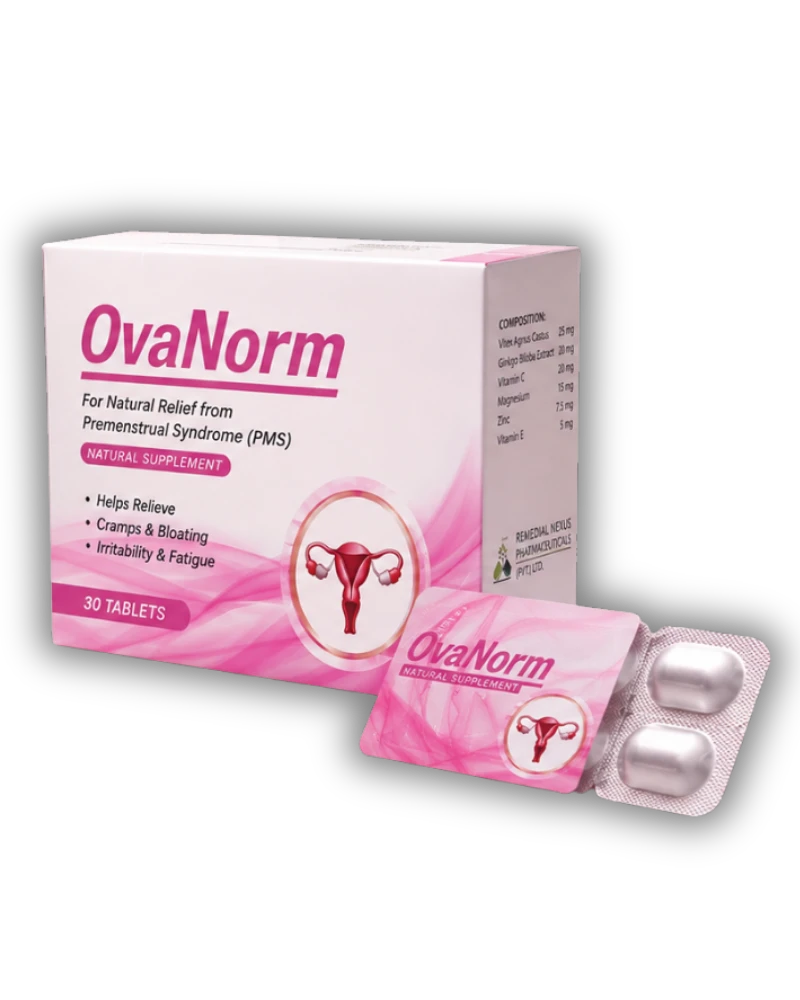
OvaNorm
A daily nutritional supplement formulated with Vitex, Magnesium, Calcium, Zinc, Vitamin C and Ginkgo Biloba to support hormonal balance and mood before and during your period.
Rs. 1,450 · Cash on delivery across Pakistan · Discreet packaging · 3–5 days
FDA and DRAP approved. It is a supplement, not a medicine. Speak to your doctor before starting.
Frequently asked questions
Periods se pehle mood kharab kyun hota hai? (Why does my mood get bad before my period?)
Period se pehle oestrogen aur progesterone ki satah tezi se girti hai. Yeh hormones dimagh ke serotonin ko bhi mutasir karte hain, jo mood aur neend ko control karta hai. Is liye chid, udaasi aur gussa aam hai. Yeh aap ki shakhsiyat ki kharabi nahi, hormonal tabdeeli hai.
Is it normal to cry before my period?
Yes, this is very common. Falling hormones lower serotonin, which can make emotions feel much closer to the surface. If it is mild and passes once your period starts, it is normal PMS. If it is severe or lasts longer, speak to a doctor.
Do mood swings mean I have a mental health problem?
Not usually. Ordinary premenstrual mood changes are hormonal, not a mental illness. However, severe symptoms (PMDD) are a recognised condition and deserve proper medical care. Either way, you are not to blame.
Kya PMS ka mood ghar walon ko batana chahiye? (Should I tell my family about PMS mood?)
Haan, is se bohat faida hota hai. Agar ghar walon ko pata ho ke yeh PMS ka hafta hai, to woh chhoti baaton par jhagra nahi karte aur kaam mein madad karte hain. Ek simple jumla: “yeh mera PMS week hai” — is se ghar ka mahol behtar ho jata hai.
Can diet help mood swings?
Yes. Regular meals with protein, magnesium-rich food (spinach, almonds, banana), calcium-rich food (doodh, dahi) and less caffeine help most women feel steadier. Skipping meals is one of the biggest triggers of irritability.
How long do premenstrual mood swings last?
Usually 3 to 7 days, ending when the period starts. In PMDD they can last 1 to 2 weeks. If they last more than two weeks each cycle, see a doctor.
References
- NHS UK — Premenstrual syndrome (PMS)
- PubMed — Exercise and mood in PMS
- PubMed — Magnesium and premenstrual mood symptoms
- PubMed — Calcium and premenstrual syndrome
- Mayo Clinic — Premenstrual syndrome
- World Health Organization — Women’s mental health
Medical disclaimer: This article is for general education only and is not medical advice. OvaNorm is a dietary supplement, not a medicine. It is not intended to diagnose, treat, cure or prevent any disease. Always consult a qualified doctor before starting any supplement, especially if you are pregnant, breastfeeding, under 18, or taking other medication. Individual results vary.
